

We are proud to say that these posts are not sponsored. Our editorial team of Bobbie moms and writers personally select each featured product. If you buy something through our links, we may earn an affiliate commission, at no cost to you.
Are you thinking about switching baby formulas? Formula changes happen for many reasons, from allergies and medical issues to formula recalls and brand preferences. Babies can often swap formulas with no problems — even if it has to happen immediately due to unforeseen circumstances.
You may be wondering if switching formulas can be done quickly or how long it takes for a baby to adjust to a formula change. These are totally normal questions and important considerations as you make this decision!
We spoke to Lauren Crosby, MD, FAAP, and Bobbie Medical Advisor, to get answers that can help you transition confidently. She shares her steps in making the change and assures us that, yes, a formula switch can happen cold turkey.
- Reasons to Switch Baby Formula
- 7 Things To Try Before Switching Baby Formulas
- How to Switch Baby Formulas: From Gradual to Cold Turkey
- Switching Baby Formulas Side Effects
- Switching Baby Formulas FAQs
- How long after changing baby formulas do you see side effects?
- How long does it take a baby to adjust to a new formula?
- How long does it take to transition baby formulas?
- How can I tell if a formula isn’t working for my baby?
- What are the signs and symptoms of an allergy to formula, like a cow’s milk allergy?
- When should you switch to different baby formulas?
- When should you switch formulas because of gas?
- Is it bad to keep switching baby formulas?
- Switching Baby Formulas the Right Way
Reasons to Switch Baby Formula
Maybe your little one is experiencing sensitivities to your current formula, or perhaps you simply want to try out another kind. Several motives can cause you to consider switching:
Recalls and/or Availability Issues
While rare, formula recalls do happen. One of the benefits of using a US-based formula is that recall information is typically widely shared via email and social media. Recalls can also impact product availability in-store and online, and sometimes a formula switch may be necessary if the product you usually use is out of stock.
Convenience and Cost
Many families switch formula type based on convenience, cost and availability. Ready-to-feed formula is just that: ready to feed directly from the bottle. It’s sterile, making it the best choice for premature or immunocompromised babies, and it’s incredibly convenient for travel and on the go. The downside, however, is that ready-to-feed formula is a bit pricier than powdered formula.
Another, lesser-known option is a liquid concentrate formula, which typically comes in cans or tetra-paks. Because it just needs to be mixed with water (usually at a 1-to-1 water-to-formula ratio), it’s extremely convenient. While also expensive, on average, it’s cheaper than ready-to-feed.
Many infants can switch between these types of formula without issue. But be aware that some brands have different ingredients across powder, ready-to-feed, or concentrate products, even if the product name is the same on each.
Going Organic
While both organic and non-organic formulas meet FDA regulations for nutritional composition for infants, organic formulas limit the use of synthetic pesticides, antibiotics or growth hormones.
If parents prefer an organic baby formula, most babies can switch without issue as long as the key ingredients (protein type/size and carbohydrate source) are similar between the two products.
Personal Choice to Switch Formulas
Your needs matter, too! If a formula doesn’t work for your budget, values, religious requirements (i.e., must not use certain animal by-products) or any other reason, you might consider trying another formula option.
Pediatrician Suggestion
It’s important to communicate with your doctor before switching baby formulas, as these trained professionals have more insight into what may be causing certain symptoms. Your child’s doctor may recommend a trade-off based on the following signs:
Diagnosed Allergy
Between 2.5-7% of babies have a milk protein intolerance or allergy (referred to as CMPI or CMPA). If your baby was diagnosed with a milk allergy via a stool test or based on symptoms, you’ll need to switch to a hypoallergenic formula.
Blood in Stool
Blood in your baby’s diaper is never a good thing, but don’t panic. Whether visible or hidden (occult), this typically means you’ll need to select a hypoallergenic formula due to a food sensitivity or allergy.
Diagnosed Condition
A diagnosed condition, such as FPIES, GERD, or metabolic disorders, may necessitate a formula switch to treat symptoms.
7 Things To Try Before Switching Baby Formulas
Before you switch formulas, it can be beneficial to try a few strategies first. Often, parents assume that the formula is the cause of a problem when, in reality, their baby may be experiencing normal infant digestive symptoms. In many cases, a simple switch of bottles, how your little one is being fed or the addition of a probiotic supplement can make an enormous difference.
Try these methods before jumping to an entirely new formula:
1. Paced Feeding
Sometimes called “responsive feeding,” paced feeding is a method for bottle feeding that better mimics feeding at the breast. Paced feeding strategies allow the baby to control the flow of breast milk or formula, which helps to minimize excess air intake, gulping of milk/formula and overfeeding.
2. Probiotics
The good bacteria found in a probiotic supplement can support the growth of healthy gut flora in your baby’s digestive tract. Some probiotics are also clinically shown to reduce colic symptoms. Discuss with your pediatrician before using probiotics, as they are not recommended in some cases, including for extremely premature infants.
3. Gripe Water
Gripe water is an herbal supplement that may offer relief to babies who suffer from gas, colic, hiccups, or general fussiness. Gripe water is a homeopathic remedy without much clinical data to support its use. Please discuss with your pediatrician before offering to your baby.
4. Anti-Gas/Anti-Colic Bottles
These bottles are specially designed to decrease your baby’s gas pain and discomfort by reducing air intake during bottle feedings. Look for a bottle that offers some sort of venting system within the bottle itself, collar or nipple to prevent your child from taking in extra air during feedings.
5. Baby Massage
Gentle massage on an infant’s tummy can help encourage trapped air to move through the intestines and can relieve gas pain and discomfort. Gentle strokes in a clockwise or counterclockwise motion may help, as well as assisting your baby to do alternating “bicycle legs.”
6. Sleep Intervention
Many symptoms of digestive distress can mimic those of overtiredness, particularly crying, fussiness and symptoms of discomfort. Make sure sleep is on track before switching formulas (outside of obvious symptoms of allergy or intolerance).
7. Decrease Nipple Flow
Finding the right nipple flow rate can be crucial in addressing digestive discomfort. A too-fast flow can result in gas from gulping milk or formula too quickly, reflux and overfeeding.
How to Switch Baby Formulas: From Gradual to Cold Turkey
If you’re ready to make the switch, timing is everything. Dr. Crosby shared her guidance on how and when to try out a new formula:
“If your child is on a cow milk-based formula, you can typically switch right over to another cow milk-based formula. If your child is on a special partially-hydrolyzed or hypoallergenic formula, you will want to switch to a new formula that has the same protein structure — either partially-hydrolyzed (gentle) or extensively-hydrolyzed (hypoallergenic). Some formulas are more appropriate than others for infants with an allergy, so if you are not sure what is equivalent, definitely check with your child’s doctor.
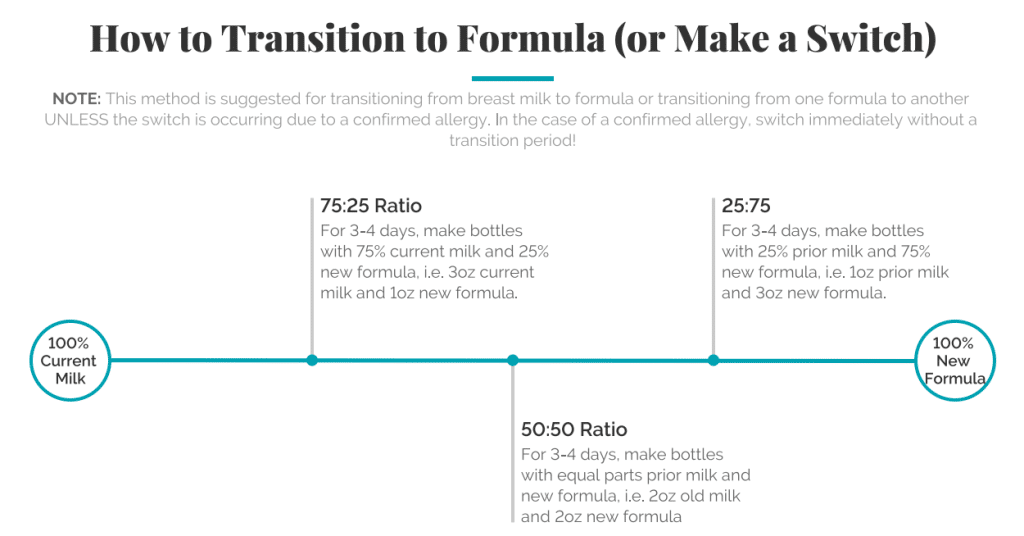
If you’re transitioning and have some of the old brand left, you can start by mixing three parts old formula and one part new formula. If the baby drinks it, move to half and half and then 1/4 old and 3/4 new. Following that would be a full bottle of the new brand.”
Can you switch baby formulas cold turkey?
“In a situation with recalls, poor product availability, or allergy symptoms, parents may need to pivot to a different formula quickly — and that’s perfectly fine to do. You can start with an equivalent formula ASAP.”
Switching baby formula brands quickly is safe and well-tolerated in infants. There are no advantages to gradually — versus immediately — switching from one formula to another.
Switching Baby Formulas Side Effects
Typically, if you’re switching to the same type of formula (routine, gentle, or hypoallergenic), there shouldn’t be any significant side effects. Some babies are more sensitive to change than others. They might dislike the taste or they might spit up more.
Poop consistency might change. Babies might poop less often, poop more often, have more runny poops, experience a change in stool color, or be gassy and fussy. It can take a week or so for a baby to adjust to the change, but if the symptoms are not causing much distress, it is ok to give it some time. If you have any concerns about the side effects of changing formulas, reach out to your baby’s pediatrician and they will let you know what is normal.
Switching Baby Formulas FAQs
How long after changing baby formulas do you see side effects?
Usually, 7-10 days is enough time for the baby to have fully transitioned to the new formula. You can monitor the baby’s symptoms to ensure this new formula isn’t causing the ill effects.
Some babies take to a change easily, while some babies’ tummies need to adjust. It’s a good idea to monitor the volume of formula intake, poop consistency, sleep schedule, spitting up, skin changes and look for blood in the stool. If you see anything concerning, give your pediatrician a call.
How long does it take a baby to adjust to a new formula?
Sometimes, when changing formulas, babies will notice a taste difference, which is more common with older babies. Often, they get used to a new one quickly. However, if they’re giving you a hard time, you should wait until they’re sufficiently hungry to try feeding, as they may be more accepting of a change.
How long does it take to transition baby formulas?
One to two weeks is a good transition period, depending on how the baby is doing and how quickly you feel comfortable making the change.
How can I tell if a formula isn’t working for my baby?
These symptoms could mean that your formula is not agreeing with your baby. Speak to your pediatrician if you recognize any of the following signs:
- Spitting up more than usual and/or projectile vomiting
- Not drinking enough volume day after day
- Hard, pellet-like poops
- Watery or foamy poops
- Blood in the poop
- Crying more/more fussy that doesn’t respond to soothing strategies
- Skin rashes or hives
- Poor weight gain or weight loss
What are the signs and symptoms of an allergy to formula, like a cow’s milk allergy?
If you suspect an allergy, you should see your baby’s doctor to discuss concerns and have the baby weighed and examined. It’s a good idea to bring a fresh poop sample to the doctor’s visit to be examined.
Allergy symptoms may include:
- Spitting up more than typical
- Poor appetite
- Projectile vomiting
- Not gaining weight well
- Watery poops
- Blood in the poop
- Crying more/more fussy that doesn’t respond to soothing strategies
- Not sleeping well
- Skin rashes
When should you switch to different baby formulas?
Talk to your pediatrician to see if it’s time to change to a gentle or hypoallergenic infant formula if your baby:
- Is very fussy, spits up constantly
- Isn’t gaining weight or feeding well
- Has blood in their stool
- Is very gassy
- Sleeps poorly because they seem to be uncomfortable
There are different types of formulas depending on the baby’s symptoms. Some are hypoallergenic — meaning the proteins are extensively broken down so they can be digested more easily without triggering an allergic response. These are for babies with a diagnosed cow milk protein allergy.
Other formulas contain partially-hydrolyzed proteins, which could work for babies experiencing gas and/or fussiness, but not a true milk allergy. Some formulas are made for “lactose sensitivity,” but babies in general don’t have lactose intolerance (as lactose is the primary carbohydrate in breast milk, regardless of whether a mom consumes dairy products). Typically, if a formula helps, it’s because it also has some of the proteins broken down for easier digestion.
When should you switch formulas because of gas?
Often, parents think gas is the reason their baby is fussy, but that’s not always the case. Fussiness can be caused by several different factors.
If your baby cries a lot, then passes gas and seems relieved, gas is likely the issue. If these episodes don’t occur often and are over quickly, then it’s fine not to do anything as long as the baby is growing well, pooping, happy and sleeping. If you think your little one is gassy, then try out a different type of bottle or nipple and make sure they burp well. Your pediatrician may recommend an over-the-counter gas remedy as a next step, and if that doesn’t help, then they might recommend a formula switch.
Is it bad to keep switching baby formulas?
It can take up to one to two weeks for a baby to fully adjust to a new formula. When possible, try to avoid switching formulas during this transition period, as too many changes in a short period can often increase digestive upset and cause symptoms that may falsely indicate that your baby isn’t tolerating a formula well.
Switching Baby Formulas the Right Way
Whether you’re exclusively formula-feeding or supplementing with formula, there are many reasons a formula switch may occur. It could be because of an allergic reaction, your personal preferences, a recall, or an availability issue. In general, switching is completely safe!
As always, please involve your baby’s healthcare provider so you can get the best guidance on how to switch and what formula is best for your baby.
Want to test out a trusted brand? Bobbie’s formula is designed to give your baby the nutrients they need for healthy growth. With DHA, choline, iron, lactose that naturally provides prebiotic properties, and other essential ingredients, you can rest assured that every sip is supporting your baby for years to come.